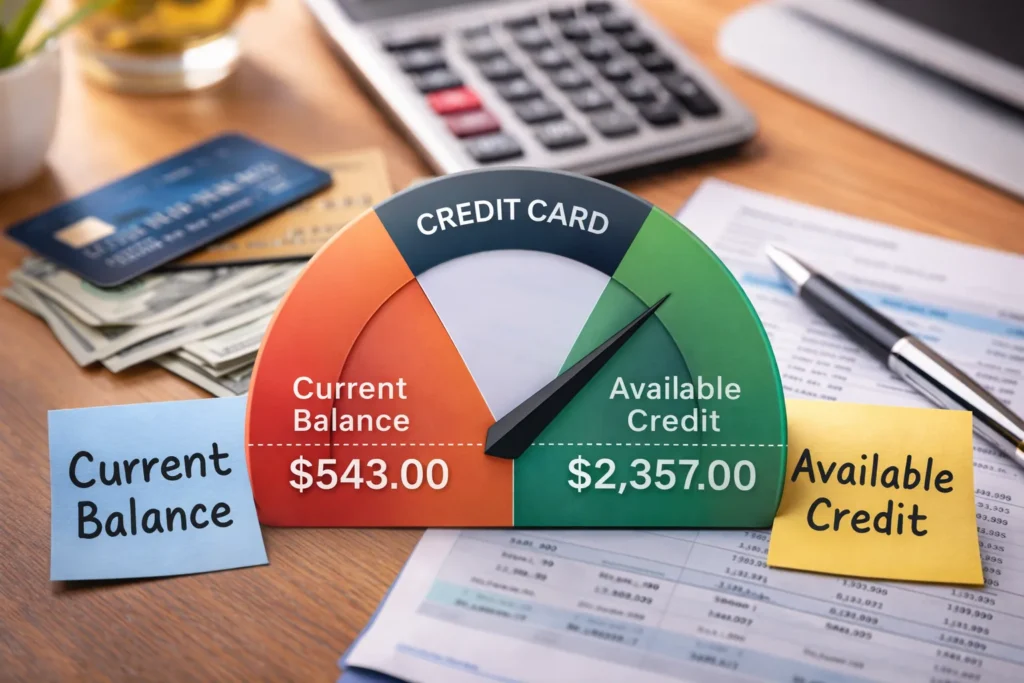
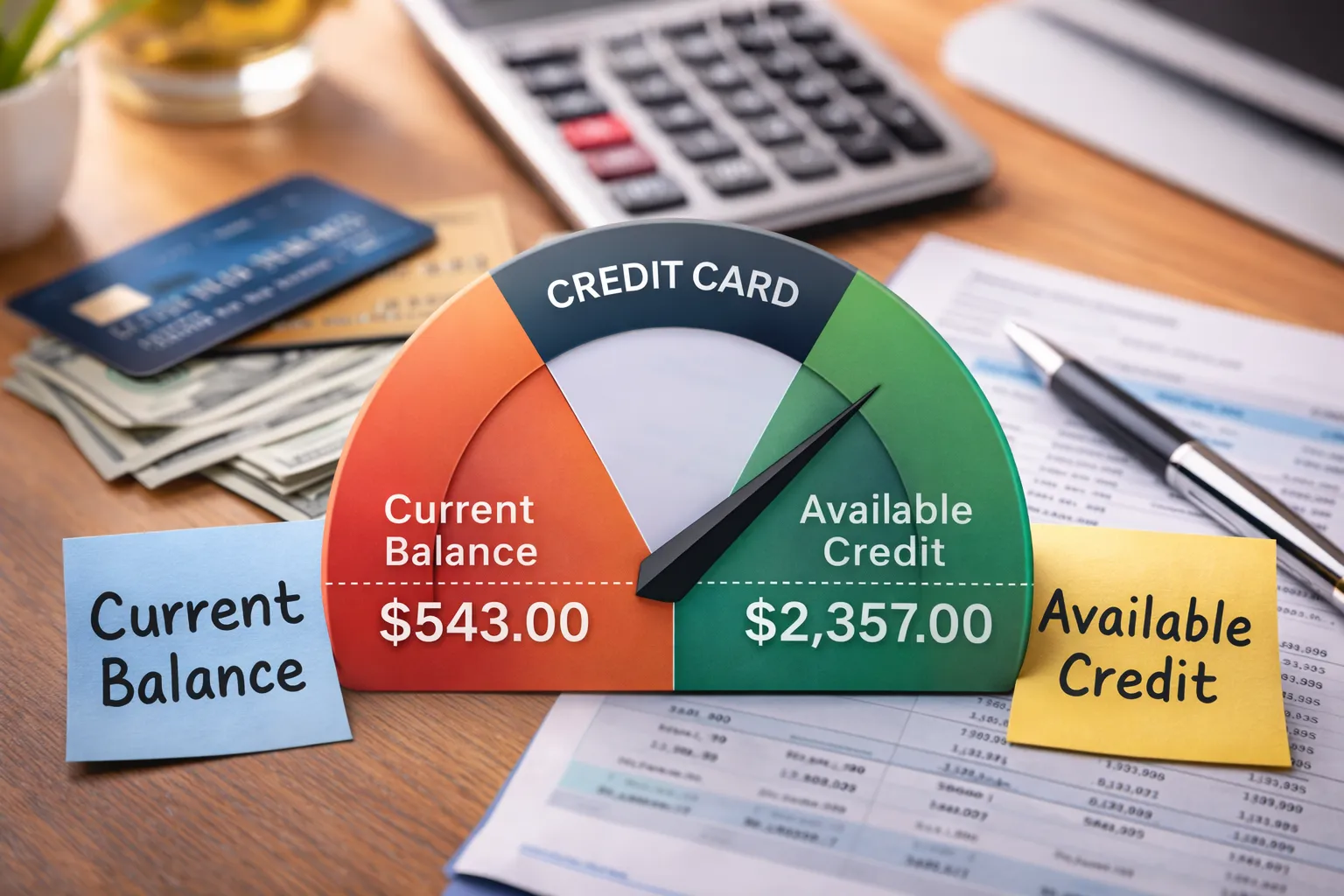
I remember the first time I noticed my credit card app showed two different numbers: my current balance and my available credit. I assumed they meant the same thing, but they didn’t. When I first asked myself what is the difference between current balance and available credit, I realized that understanding it completely changed how I managed my spending and avoided declined transactions.
In simple terms, your current balance represents what you currently owe. Your available credit shows how much of your limit remains unused. But the real explanation goes deeper, especially when pending transactions, payments, and billing cycles are involved.
Once I understood how these two numbers move independently, I stopped getting surprised by declined purchases and confusing app updates. In this article, I’ll break down exactly how they work, why they don’t always match, and how to use both numbers to stay in control of your credit.
After reviewing issuer disclosures and tracking multiple billing cycles on my own accounts, I realized most confusion comes from how banks calculate available credit in real time.
💡 Key Takeaways:
- Core Difference: Your current balance is what you owe right now, while your available credit is how much you can still spend.
- Pending Charges Matter: Transactions can reduce available credit before they appear in your current balance.
- Credit Limit Formula: Available credit equals your credit limit minus your current balance and pending transactions.
- Utilization Impacts Score: Keeping your balance below 30 percent of your limit supports a healthy credit score.
- Timing Can Vary: Payments may not immediately restore full available credit depending on your issuer.
Current Balance vs Available Credit
In simple terms, your current balance is what you owe right now. Your available credit is how much you can still spend before reaching your limit.
When comparing current balance vs available credit, think of it this way: your credit card current balance meaning refers to all posted charges, interest, and fees currently on your account. Available credit meaning is the unused portion of your credit limit that remains accessible for new purchases.
These two numbers move in opposite directions. When your balance increases, your available credit decreases. When you make a payment, your balance drops and your available credit rises.
If you are still wondering what is the difference between current balance and available credit, the simplest answer is this: one reflects debt already owed, and the other reflects remaining borrowing capacity.
For example, think of this as a simple credit card available credit explanation: it represents the portion of your credit limit that remains accessible after subtracting posted and pending transactions.
How These Numbers Move in Real Time
One thing that helped me understand current balance vs available credit was seeing how each action affects them differently. This is exactly how current balance affects available credit limit, as your balance increases, your remaining spending room automatically shrinks.
| Action | Current Balance | Available Credit |
| Make a Purchase | Increases after posting | Decreases immediately |
| Make a Payment | Decreases | Increases |
| Pending Charge | Stays the same until posted | Decreases immediately |
How Banks Calculate Available Credit

Once I understood the math behind it, everything became easier.
The basic formula banks use is:
Credit Limit – (Current Balance + Pending Transactions) = Available Credit
Here is where most people get tripped up.
Even if your current balance looks accurate, pending transactions are still deducted from your available credit immediately.
Learning how to calculate available credit from current balance helped me stop relying entirely on app displays. I could verify the number myself in seconds.
If you have ever wondered how banks calculate available credit, the process is automated and formula-driven. Banks use real-time systems that subtract your current balance and any pending authorizations from your total credit limit.
The exact system may vary slightly depending on the institution, which is why understanding what is the difference between a bank and credit union can also matter when comparing account policies.
This is where available credit vs credit limit comparison becomes important. Your credit limit is your maximum borrowing capacity. Your available credit is simply what remains unused at that moment.
Can I Spend This Money Right Now?
Most people searching for the difference between current balance and available credit are really asking one thing: can I use this card for my next purchase?
The number that matters in that moment is your available credit. Even if your current balance looks manageable, pending transactions may already be reducing your spending power.
If your purchase exceeds your available credit, the transaction will likely be declined.
Does Current Balance Include Pending Transactions?
This was one of my biggest early misunderstandings.
Does current balance include pending charges? Usually, no. Pending transactions often reduce your available credit immediately, but they may not show in your current balance until they officially post.
That is exactly how pending transactions impact available credit amount. When you swipe your card, the bank temporarily holds that amount. Your spending power drops right away, even though your posted balance may not reflect it yet.
If you have ever asked why does my available credit change daily, this is the reason. New purchases, posted transactions, holds, and payments can all shift the number.
Why Is There a Gap Between the Two Numbers?
I used to panic when the numbers did not line up.
Common causes include:
- Authorization holds from gas stations, hotels, or car rentals
- Pending transactions that have not posted yet
- A recent payment that reduced my current balance but had not refreshed available credit
Once I understood this, the gap stopped feeling mysterious.
Why Is My Available Credit Lower Than My Credit Limit?

I remember checking my account and thinking something was wrong.
Why is my available credit lower than my credit limit? The most common reason is that you have already used part of your limit through posted or pending charges.
Even if your current balance looks smaller than expected, pending transactions can still reduce available credit. This creates a gap that confuses many cardholders.
Once I understood how these two numbers interact, I stopped assuming something was wrong and started checking pending charges first.
What Happens When Current Balance Reaches Credit Limit?
I once came very close to maxing out my card, and the stress was real.
What happens when current balance reaches credit limit is straightforward. Your card may decline new transactions, and you risk harming your credit utilization ratio.
In rare situations, available credit can go negative due to large temporary authorizations. This does not mean you borrowed extra money. It simply means your spending room is temporarily exhausted.
That experience taught me to monitor both numbers regularly, not just one.
Available Credit vs Statement Balance

Another point of confusion is available credit vs statement balance.
Your statement balance is a snapshot taken at the end of your billing cycle. It does not update daily. Your current balance updates continuously as new charges and payments post.
This is why you may see a current balance vs statement balance difference explained in your card disclosures.
Paying your statement balance in full by the due date typically avoids interest, but your current balance may still be higher if you made new purchases after the statement closed.
Some people mistakenly believe traditional savings account money stuck for a set time works the same way as credit billing cycles, but credit card balances update dynamically rather than being locked for a fixed period.
Many people also ask, does available credit update after payment immediately? Sometimes it does, but in other cases it may take one business day while the payment clears.
🎥 Credit Card Statement Balance vs. Current Balance Explained
This video is a perfect companion to your article because it visualizes the “running tally” of your finances. It explains why your Current Balance updates daily while your Statement Balance stays frozen, and most importantly, how Available Credit acts as your real-time “gas tank” for spending. It’s short, to the point, and uses clear examples that match your “Practical Example” section perfectly.
How Available Credit Affects Your Credit Score
This is where things get serious.
How does available credit affect credit utilization ratio? Credit utilization measures how much of your limit you are using. If your balance is 500 dollars on a 1,000 dollar limit, your utilization is 50 percent.
Financial experts generally recommend keeping utilization below 30 percent. Many FICO scoring models treat credit utilization as one of the most influential factors in your overall score. Lower utilization signals responsible borrowing behavior to lenders.
Can available credit impact my credit score? Indirectly, yes. When your available credit shrinks because your balance rises, your utilization increases. Higher utilization can lower your score, even if you pay on time.
That is why I now treat available credit as more than just spending room. It is a score protection tool. Just as someone might research which savings account will earn you the least money? to avoid poor returns, understanding your available credit helps you avoid costly credit score mistakes.
Most credit card issuers report your statement balance to the credit bureaus, not your daily current balance. That is why timing your payments before your statement closes can influence your reported utilization.
If someone asks again what is the difference between current balance and available credit, I now explain it as both a budgeting concept and a credit score factor. One shows your obligation. The other shows your flexibility.
Does Paying Off Current Balance Restore Full Available Credit Immediately?

Not always. In many cases, your current balance decreases right away after a payment posts, but your available credit may take several hours or up to one business day to fully refresh, depending on how quickly the issuer clears the funds. This timing difference explains why you may see a temporary gap after paying.
Practical Example: How the Numbers Move
Walking through an example made everything click for me.
Imagine you have a 1,000 dollar credit limit. Your current balance is 200 dollars. You make a 50 dollar purchase that is still pending.
Your available credit becomes 750 dollars because the bank subtracts both your current balance and the pending transaction. However, your current balance remains 200 dollars until that 50 dollar charge officially posts.
Seeing this difference between current balance and available credit on a credit card in real time helped me understand why the numbers never move in perfect sync.
Quick Comparison Reference
| Feature | Current Balance | Available Credit |
| Simple Definition | What you owe | What you can still spend |
| Includes Pending Transactions | No (usually) | Yes |
| Changes When You Spend | Increases | Decreases |
| Changes When You Pay | Decreases | Increases |
| Affects Credit Utilization | Yes | Indirectly |
FAQs
1. What is the difference between current balance and available credit?
Your current balance is the total amount you owe on your credit card at that moment. Your available credit is the remaining portion of your credit limit that you can still spend. As one goes up, the other goes down.
2. Does current balance include pending transactions?
Usually, no. Pending transactions often reduce your available credit immediately but may not appear in your current balance until they fully post.
3. Why is my available credit lower than my credit limit?
Your available credit is lower because it reflects posted charges plus any pending transactions. Even temporary holds or recent purchases can reduce your remaining spending power.
4. When does available credit increase after a payment?
Available credit typically increases once your payment posts to your account. In many cases, this happens within a few hours or by the next business day, depending on your issuer.
5. How does available credit affect credit utilization ratio?
Credit utilization measures how much of your total credit limit you are using. When your available credit decreases due to a higher balance, your utilization rises, which can negatively affect your credit score if it exceeds recommended levels.
6. Is current balance the same as statement balance?
No, the statement balance is fixed at the end of the billing cycle, while the current balance updates daily.
Final Thoughts
Understanding the difference between current balance and available credit gave me clarity and control. Before that, I only looked at one number and assumed I was safe.
Now I check both. One reflects my total obligation. The other shows my remaining spending power.
Once you understand how these two numbers interact, you reduce surprises, avoid declines, and protect your credit score at the same time.