
 Posted by
 We have all seen backyards that feel less like a sanctuary and more like a showroom. They are packed with every amenity imaginable: a massive pergola, a full stainless steel kitchen, a fire pit, a water feature, and a pool, all squeezed into a modest footprint. While the intention is to create a luxury experience, the result often feels cluttered, chaotic, and disconnected from nature.
Understanding Your Space
Before you buy a single paver or plant a shrub, you must stop and listen to the land. Every property has a unique personality, defined by its topography, soil conditions, and exposure to the elements. Ignoring these factors is the quickest way to end up with a design that feels forced or artificial.
Start by mapping out the physical constraints. Is there a steep slope? Does water pool in a specific corner after heavy rain? Instead of fighting these features with massive earth-moving projects, consider how you can work with them to your advantage. A slope isn’t just an obstacle; it’s an opportunity for tiered garden beds or a dynamic change in elevation that separates dining areas from lounging zones.
Next, observe the light. Note where the sun hits at 9:00 AM versus 4:00 PM. There is no point in placing a dining table in a spot that is blasted by the scorching afternoon sun, just as a sun-bathing deck won’t get much use in a localized frost pocket. Understanding these microclimates ensures that you place amenities where they will actually be comfortable to use.
Defining Your Style
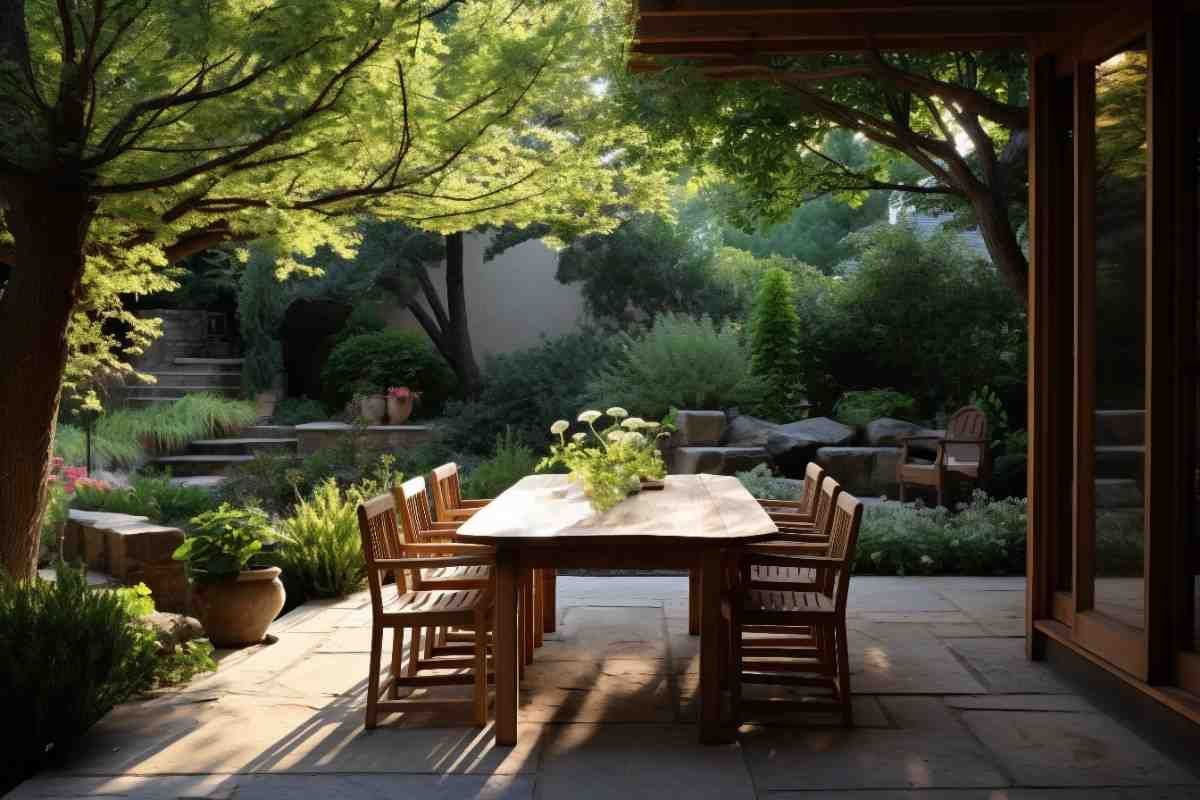
A common mistake homeowners make is treating the backyard as a separate entity from the house. To look intentional, your outdoor design should feel like an extension of your indoor living space. The architectural language of your home should dictate the vocabulary of your landscape.
If you have a mid-century modern home with clean lines and large glass windows, a cottage-style garden with wild, overflowing flower beds and rustic picket fences might feel jarring. Instead, you would likely opt for geometric hardscaping, ornamental grasses, and minimalist furniture. Conversely, a Victorian farmhouse calls for softer edges, traditional materials like brick or cobblestone, and romantic plantings.
This doesn’t mean you have to match everything perfectly. Contrast can be beautiful. However, there should be a thread of continuity—perhaps a color palette, a material texture, or a recurring shape—that ties the indoors to the outdoors. When the transition is seamless, the entire property feels larger and more cohesive.
Prioritizing Functionality
An intentional space is, above all, a usable space. It is tempting to browse Pinterest and decide you want a pizza oven, a koi pond, and a putting green. But if you don’t actually golf or cook pizzas from scratch, those expensive features will simply become obstacles you have to walk around.
Focus on how you actually live. Do you host large dinner parties, or do you prefer intimate coffee mornings? Do you have children who need room to run, or is your priority a quiet place to read?
Once you identify your primary activities, create “zones.” Just as your house has a kitchen, living room, and bedroom, your yard should have distinct areas for dining, lounging, and playing. These don’t need to be separated by walls. You can define zones using:
- Changes in flooring materials: Wood decking for dining, transitioning to gravel for a fire pit.
- Area rugs: Outdoor textiles can ground a seating arrangement.
- Planting buffers: Low hedges or tall grasses can create a psychological sense of enclosure without blocking the view.
Remember the importance of negative space. Open areas of lawn, gravel, or decking allow the eye to rest and make the designed elements pop. If you fill every square inch, the yard will feel claustrophobic.
Selecting Materials Wisely
Material selection is where the line between “curated” and “overbuilt” is often crossed. A common pitfall is using too many different materials in a small space—concrete, brick, wood, slate, and metal all competing for attention. This visual noise creates clutter.
Stick to a restrained palette of two or three primary materials. If your house has red brick, perhaps use that for pathways and pair it with a neutral bluestone patio. If you have wood siding, a timber deck might blend in perfectly.
Durability and sustainability should also drive your choices. Permeable pavers allow rainwater to soak into the ground, reducing runoff and helping your garden. Local stone often looks more natural than imported exotic tiles because it matches the geological tones of the region.
When dealing with elevation changes, opt for solutions that mimic nature. For example, a boulder retaining wall in West Valley City often feels much more intentional and integrated than a stark, poured concrete wall. The boulders provide nooks for moss and small plants to grow, softening the hardscape and making the structure look like it has been there for centuries.
Planting Strategically
Plants are the connective tissue of your landscape. They soften the hard edges of patios and fences, provide privacy, and introduce movement and sound. However, “strategic” does not mean “sparse,” nor does it mean “jungle.”
Avoid the “one of everything” approach. A garden looks more professional and intentional when you plant in drifts or masses. Seeing five hydrangeas grouped makes a stronger visual statement than five different shrubs scattered randomly. Repetition of specific plants creates a rhythm that guides the eye through the space.
Use greenery to solve problems. Need privacy from a neighbor’s window? A row of pleached trees can act as a stilt hedge, blocking the view while leaving the ground level open. Need to hide a pool pump? Tall ornamental grasses can provide a soft screen.
Consider the seasonality of your plants. An intentional design looks good year-round. While flowers are lovely, relying solely on them means your yard might look dead in winter. incorporate evergreens and plants with interesting bark or structure to ensure the view remains appealing even in January.
Adding Personal Touches
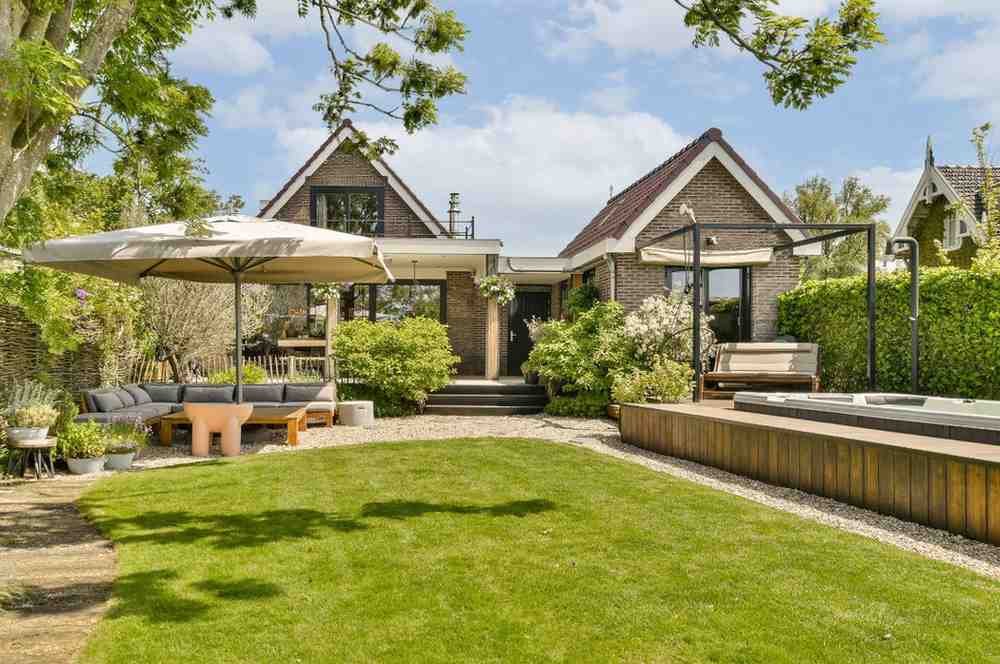
Once the “bones” of the design are in place—the hardscape, the zones, the major plantings—you can layer in personality. This is the jewelry of the design: lighting, furniture, and art.
Lighting is crucial for extending the usability of your space into the evening. Avoid floodlights that wash everything out. Instead, aim for soft, ambient light. Uplights on trees can create dramatic shadows, while string lights over a dining table create an intimate bistro vibe. Path lights should be subtle, guiding the way without blinding you.
When choosing furniture, scale is everything. Massive, overstuffed sofas can swallow a small patio, while bistro chairs might look lost on a large deck. Choose pieces that fit the scale of the zone. And don’t be afraid of art—a sculpture, a water feature, or even a beautiful ceramic pot can serve as a focal point. Just remember the rule of restraint: one breathtaking focal point is better than ten mediocre ones.
Maintaining Your Space
The most beautiful design in the world will fail if it requires more maintenance than you are willing to provide. An overbuilt garden often comes with an overbearing maintenance schedule.
Be honest with yourself about how much time you want to spend gardening. If you travel frequently, a high-maintenance rose garden or a lawn that requires twice-weekly mowing is a bad idea. Opt for slow-growing shrubs, drought-tolerant natives, and hardscapes that age gracefully.
Understand that materials change over time. Wood turns gray; copper develops a patina; stone might grow moss. This aging process helps the landscape settle into its surroundings. Trying to keep everything looking brand-new and sterile fights against the natural order of the outdoors. Embrace the wabi-sabi—the beauty of imperfection and age.
Conclusion
Designing an outdoor space is an exercise in editing. It is about understanding that what you leave out is just as important as what you put in. By respecting the land, harmonizing with your home, and prioritizing how you actually live, you can elevate your backyard that feels effortless.